What makes a secret mountain base in Rust so effective at surviving wipes?
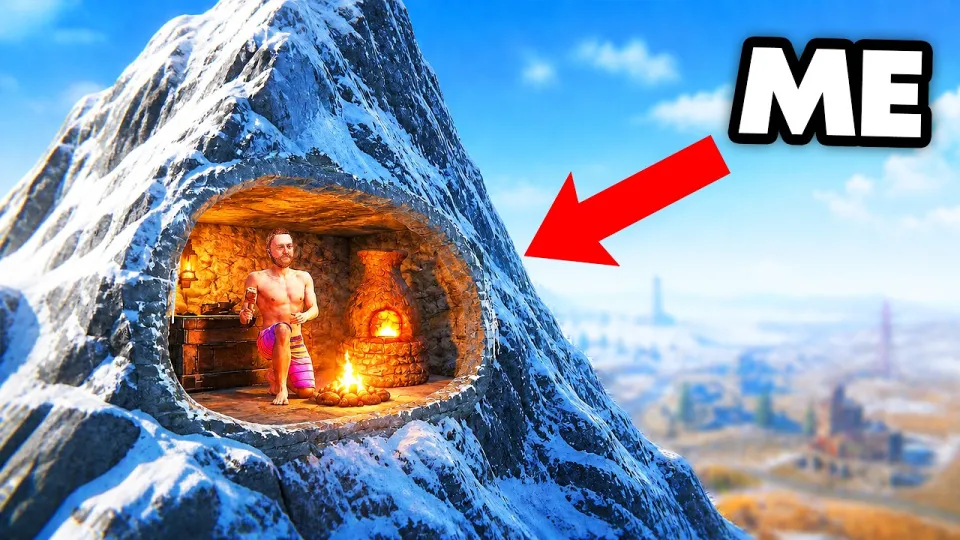
Video: I Lived in a Secret Mountain Base in Rust
You can order the same kind of articles for your own video to boost it on YouTube and Google. Just message the Telegram bot @sat_sit_bot. It writes articles around your video, embeds the video and publishes them on popular niche websites (no ads). Your first 50 articles are free.
Key takeaways
- Memeio's secret mountain base survived a full wipe without being raided.
- Location above common travel routes matters more than base size.
- Broken wooden spears can be recycled into stone spears to double eco-raid tools.
- Camouflage that blends with rock and snow delays detection by roaming players.
- Cheaters remain a threat that no base location can fully counter.
A secret mountain base in Rust works because it removes you from the map's traffic. Instead of building a fortress that invites raids, you place a small footprint in terrain that other players rarely inspect, and you keep it stocked through short, quiet runs. That is the core idea behind Memeio's wipe experiment, and you can follow the creator's updates via his X account.
Why a secret mountain base in Rust beats a bigger compound
A hidden mountain base in Rust wins by avoiding attention, not by winning fights. Most players build near roads, monuments or flat buildable land because those spots are convenient, and convenience is exactly what makes a base visible. A mountain slot forces you to trade convenience for obscurity: fewer neighbours, fewer passers-by and fewer reasons for a clan to spend explosives on a 2x1.
The trade-off is real. You carry more, you fall more, and you spend time on routes that a road base would skip. But the survival math is simple: a base that is never scouted is never raided, and a base that is never raided keeps every wipe's progress. Memeio's run leans on that logic for the whole wipe.
How to pick a mountain location that stays unnoticed
Location selection is the single biggest factor in whether a secret mountain base in Rust lasts. The goal is a spot that is technically buildable but practically ignored.
- Choose terrain above or beside common travel paths, not on the ridge line players scan from a distance.
- Avoid flat plateaus with obvious building sockets; look for small pockets where a foundation fits but a compound does not.
- Check the approach from several angles, including from below, because most players look up at mountains only when they hear gunfire.
- Keep the base small enough that a single wall or door hides the whole interior from a casual glance.
- Stay away from monuments and roads that generate regular foot traffic.
The mountain setting also limits how many players can approach at once, which buys time to react even if someone does spot the base.
Camouflage and base design for a hidden mountain slot
Camouflage in Rust is about breaking the silhouette, not about literal invisibility. A small base tucked against rock and snow reads as part of the terrain at a distance, while a clean square box on an open slope reads as a target. Memeio's build keeps the footprint tight and uses the mountain itself as the outer wall.
Practical choices that help:
- Use materials and skins that match the surrounding rock or snow rather than high-contrast defaults.
- Keep external signs of activity low: no bright doors facing the valley, no furnaces running in the open.
- Store loot in small, separated rooms so a single breach does not expose everything.
- Build a second, smaller stash nearby for emergency re-gearing if the main slot is found.
Viewers have pointed out that many so-called hidden bases are still obvious from the air or from a nearby hill. That criticism is fair, and it is the reason a mountain slot should be judged from the angles other players actually use, not from the builder's own confident viewpoint.
Eco-raiding and early-game tricks that keep a mountain base running
A mountain base survives on efficient early-game economics. One trick highlighted in the community is recycling broken wooden spears into stone spears: with a bit of stone, you effectively double the number of spears you can bring to an eco-raid. The detail that matters is inventory order, because broken spears need to sit ahead of unbroken ones for the crafting flow to work smoothly.
Other habits that fit a hidden playstyle:
- Run short trips and bank loot often instead of hauling everything at once.
- Craft on-site where possible so you do not carry finished gear through open ground.
- Use the mountain's verticality to break line of sight when moving in and out.
- Keep a cheap kit ready for quick re-gears after a failed fight.
These are not flashy plays, but they reduce the number of times you expose a base that is supposed to stay invisible.
What actually threatens a secret mountain base
No location stops a determined cheater. Viewers of the wipe pointed out that cheating ruins otherwise good runs, and that is the honest limit of any hiding strategy: a player using illicit information can find a base that legitimate players would never scout. Beyond that, the main threats are ordinary ones.
- A single curious neighbour who builds nearby and starts probing.
- Noise discipline failures: gunfire, explosions or visible furnaces that draw a crowd.
- Server population shifts that push traffic into previously quiet corners of the map.
- Complacency, where the owner stops checking approaches and leaves doors or loot exposed.
A mountain base reduces the odds of being found; it does not make you immune. Treat it as risk management rather than a guarantee.
Common questions about hidden bases in Rust
Players often ask whether a tiny base is worth the limited storage. In practice, a small hidden slot with separated rooms holds enough for a solo wipe if you bank regularly, and it is far more likely to survive than a larger base in a contested area. Another frequent doubt is whether camouflage is pointless because other players can see the base anyway. The answer is that camouflage buys time, and time is what lets you move loot or defend.
A third recurring question is whether hiding is less fun than fighting. That depends on the player: some enjoy the tension of quiet survival, others prefer the chaos of open PvP. The mountain approach suits anyone who values keeping progress over chasing every fight.
Useful links
- Memeio on X — updates and clips from the creator.
- Epidemic Sound — the music library credited in the video.
The verdict on secret mountain bases in Rust
A secret mountain base in Rust is a legitimate survival strategy, not a gimmick. It trades convenience and storage space for a much lower chance of being raided, and it rewards players who understand terrain, noise discipline and efficient early-game crafting. Memeio's wipe shows the appeal clearly, even as viewers rightly note that a base visible from the right angle is not truly hidden. If you want to follow more experiments like this, check Memeio's X profile for new videos and updates.
Source: I Lived in a Secret Mountain Base in Rust · Markdown version
Questions & answers
Is a secret mountain base in Rust actually safe from raids?
It is safer than a base in a high-traffic area, but not immune. A mountain slot reduces the number of players who ever see it, which lowers raid odds, yet a determined neighbour or a cheater can still find it. Treat it as risk reduction rather than a guarantee.
How do you double eco-raid spears with broken wooden spears?
Broken wooden spears can be crafted into stone spears using a little stone, so you get more usable weapons from the same inventory space. Keep broken spears ahead of unbroken ones in your inventory so the crafting order works without shuffling items.
Why do viewers say hidden bases are still obvious?
Because many builds are only hidden from the owner's viewpoint. A base on an open slope or a ridge line stands out from nearby hills or from the air, even if it looks tucked away from inside. Checking the approach from several angles is the fix.
Does hiding in the mountains make Rust less fun?
It changes the pace rather than removing fun. You spend more time on quiet routes and less on open PvP, which suits players who prefer keeping progress over chasing fights. Others find the tension of staying unnoticed more engaging than a straight firefight.